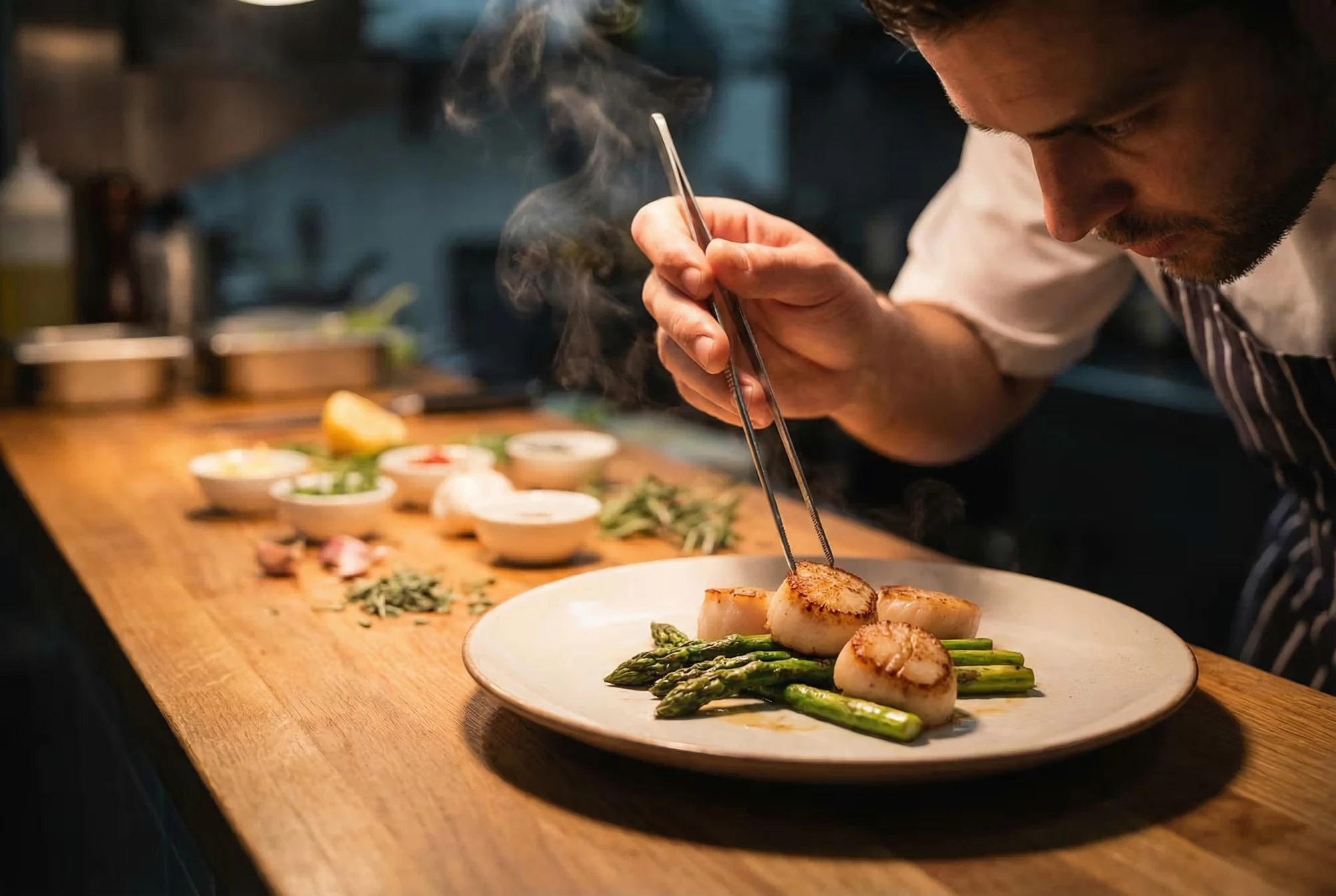
Find your food photographer
On Graindevue, you'll find photographers who specialize in culinary imagery. They understand the technical challenges of food photography, work efficiently within short freshness windows, and create images that make viewers hungry.
Why book on Graindevue?
Technical mastery of food photography
Food presents unique photographic challenges:
Texture and detail: Capturing the crispy skin, the glistening sauce, the steam rising: the details that communicate deliciousness Color accuracy: Ensuring food looks appetizing, not processed or artificial Lighting complexity: Balancing highlight and shadow to show dimension without washing out or obscuring Temperature racing: Working quickly while food looks its best, before ice cream melts or lettuce wilts
Our food photographers have mastered these challenges. They know the tricks: the blowtorch to brown cheese, the spray bottle for freshness, the careful placement that makes plating look effortless.
Range of aesthetic styles
Food photography aesthetics vary as much as cuisine styles:
Bright and modern: Clean, airy images popular for contemporary restaurant marketing Dark and moody: Dramatic lighting emphasizing texture and depth Rustic and authentic: Natural, styled but not overdone, emphasizing ingredients Editorial and conceptual: Creative compositions for magazines and brand campaigns Clean commercial: Product-focused images for packaging and e-commerce
Browse portfolios to find photographers whose style matches your brand identity.
Professional equipment and facilities
Some food photographers work from equipped studios with integrated kitchens, professional lighting, and extensive prop collections. Others excel at on-location shooting in restaurant environments. Many offer both options.
Discuss your setting needs when booking. The right environment significantly impacts both workflow efficiency and final image quality.
M-Caroline Germe
Paris, France
Pour tout type de reportage professionnel culinaire, immobilier. Je réponds à vos besoins photographiques afin d'optimiser votre communication visuelle.
How it works
- Explore food photography portfolios and identify styles that match your brand aesthetic.
- Plan the session carefully: discuss dishes, preparation logistics, and desired outcomes.
- Receive images that make your culinary creations irresistible to viewers.
Types of food photography services
Restaurant and menu photography
Images that showcase restaurant offerings and attract diners:
Menu photography: Individual dish images for printed and digital menus Interior and atmosphere: Restaurant environment shots that set expectations Chef and team portraits: The people behind the food Plating moments: Action shots of dishes being prepared and presented
Restaurant shoots often combine multiple elements in single sessions.
Chef and culinary professional portfolios
Individual chefs, caterers, and culinary professionals need imagery that represents their work and personal brand:
Signature dishes: Showcasing unique creations and cooking style Process and technique: Documenting skills and methods Portrait work: Professional headshots and environmental portraits Event documentation: Capturing catering and private dining work
Brand and product photography
Food and beverage brands need imagery for packaging, marketing, and advertising:
Hero shots: Primary images featuring products beautifully Lifestyle imagery: Products in context and use scenarios Ingredient focus: Raw materials and component elements Recipe content: Step-by-step or finished dishes featuring products
Brand photography often requires consistency across product lines and campaigns.
Editorial and publication work
Food content for magazines, cookbooks, and digital publications:
Recipe photography: Finished dishes with step-by-step support images Ingredient stories: Raw materials beautifully presented Restaurant reviews: Location atmosphere and signature dishes Chef profiles: Combination of food and portrait work
Editorial food photography typically allows more creative freedom than commercial work.
Event and catering documentation
Capturing culinary work at events, pop-ups, and temporary installations:
Event atmosphere: The setting and guest experience Food service moments: Plating, passing, presentation Detail shots: Individual items and arrangements Behind-the-scenes: Kitchen action and preparation
Event photography requires working around service timelines and guest experiences.
Planning your food photography session
Timing and freshness logistics
Food's biggest photographic challenge is its temporary nature. Planning around freshness is essential:
Prepare backup items: Most dishes need multiple versions: one styling, one hero, one backup Coordinate timing: Have dishes ready in sequence, not all at once Allow setup time: Photographers need time to arrange lighting and composition before food arrives Plan for replacements: Melting, wilting, and other deterioration is normal; plan for refreshes
Professional food photography often involves more food than you'd expect, and redundancy is standard practice.
Food styling considerations
Food styling is a specialized skill that makes dishes photograph beautifully:
Self-styling: Some photographers style food themselves as part of their service Separate food stylist: For complex shoots, dedicated food stylists may be recommended Chef involvement: Restaurant chefs often plate for cameras with photographer guidance Props and surfaces: Plates, backgrounds, utensils, and decorative elements
Discuss styling approach when booking. For simpler shoots, photographer styling works well. For complex campaigns, consider dedicated stylists.
Location vs. studio
Studio advantages:
- Controlled lighting and environment
- Access to props and surfaces
- Kitchen facilities for final preparation
- No restaurant disruption
Restaurant/on-location advantages:
- Authentic environment documentation
- Convenience for restaurants
- Kitchen access for fresh preparation
- Atmosphere shots included
Many food photographers work effectively in both settings. Choose based on your specific needs.
Communicating your vision
Before the shoot, prepare:
Shot list: Specific dishes and shots you need Style references: Images that capture your desired aesthetic Brand guidelines: Colors, mood, positioning to match Usage plans: Where images will appear (this affects composition needs) Priority ranking: If time runs short, what's most important?
Clear communication ensures everyone works toward the same vision.
Technical aspects of food photography
Why food photography is specialized
The technical requirements differ from other photography:
Macro details: Extreme close-ups showing texture and ingredients Color temperature: Precise white balance for appetizing tones Depth of field: Careful focus to highlight subjects while softening backgrounds Reflections and highlights: Managing shiny surfaces and moisture Movement and steam: Capturing dynamic elements frozen in time
These skills develop through food-specific experience that other photography disciplines don't provide.
Post-production for food
Food photography typically involves specific editing:
- Color correction for appetizing tones
- Removing imperfections and distractions
- Enhancing texture visibility
- Adjusting background elements
- Composite work when needed
Discuss post-production expectations and turnaround when booking.
Frequently asked questions
How much food should we prepare?
More than you think. Professional food photography often requires 2-3 versions of each dish: one for styling and testing, one for the hero shot, and backup for problems. Specific needs depend on complexity, so discuss with your photographer.
How long does a food shoot take?
This varies significantly. A simple menu session with 10 dishes might take 3-4 hours. Complex brand campaigns with styling, multiple setups, and creative exploration might span multiple days.
Discuss timeline expectations when planning your project.
Do you provide food styling?
Many food photographers include basic styling as part of their service. Complex projects may benefit from dedicated food stylists working alongside the photographer. Ask about styling approach when inquiring.
How quickly will I receive my photos?
Standard food photography turnaround is 1-2 weeks. Rush delivery is often available for additional fees. Large commercial projects may require longer.
Can you shoot in our restaurant during service?
It's possible but challenging. Active kitchens and dining rooms create logistical complexity. Most restaurant shoots happen during closed hours. Discuss your situation specifically.
What's included in usage rights?
Standard food photography licensing covers marketing use: website, social media, menus, and promotional materials. Advertising, packaging, and commercial campaigns may require extended licensing. Your contract specifies exactly what's included.
Should we have a prop collection?
Photographers often bring their own props, but you know your brand best. Plates, linens, utensils, and surfaces that match your aesthetic can be valuable. Discuss what's needed versus what you can provide.
Images that create appetite
Great food photography doesn't just document dishes. It makes viewers hungry. The right lighting, styling, and composition transform ingredients into cravings.
On Graindevue, find food photographers who create images that make customers want to taste what you're serving.